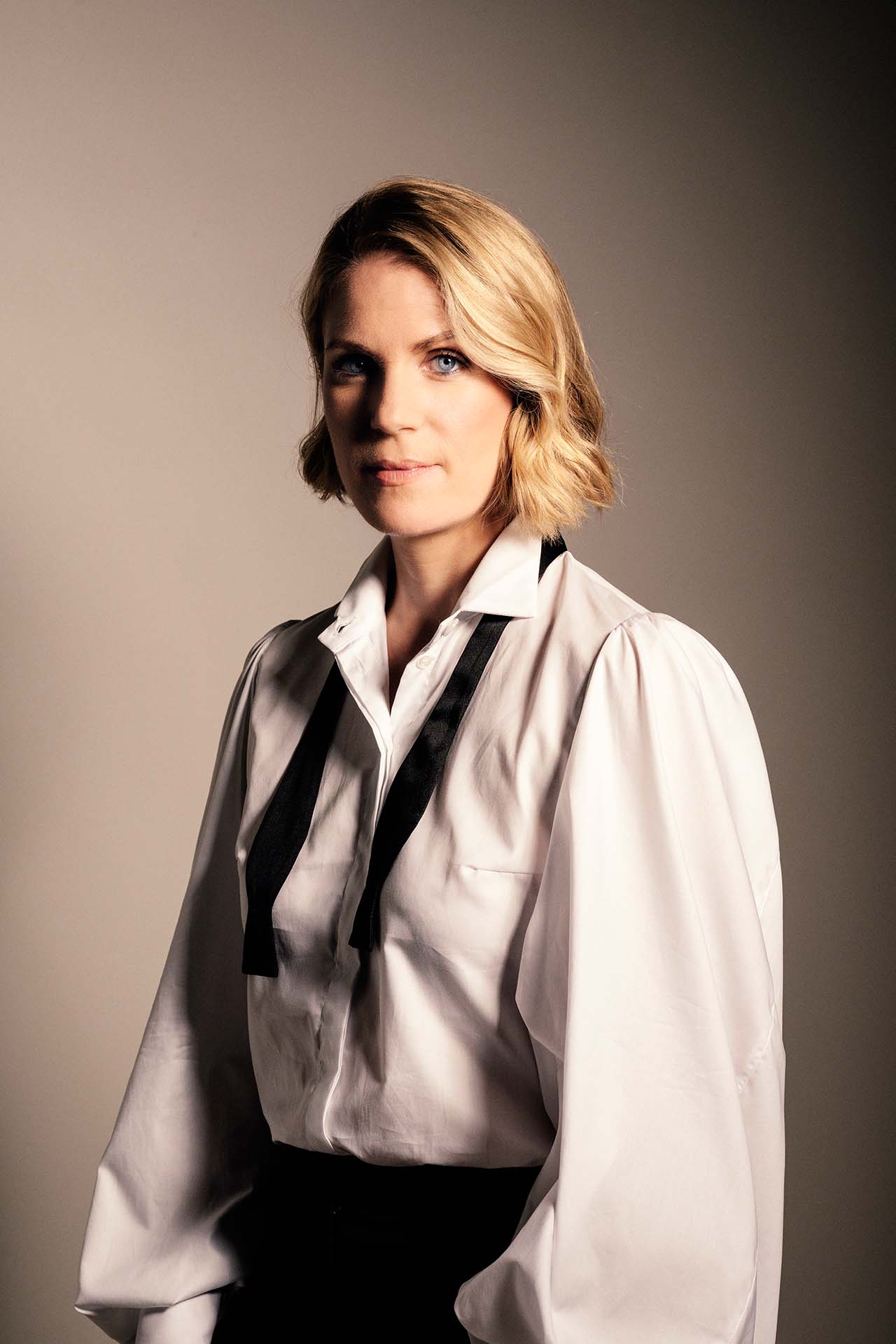

Monsieur Debussy
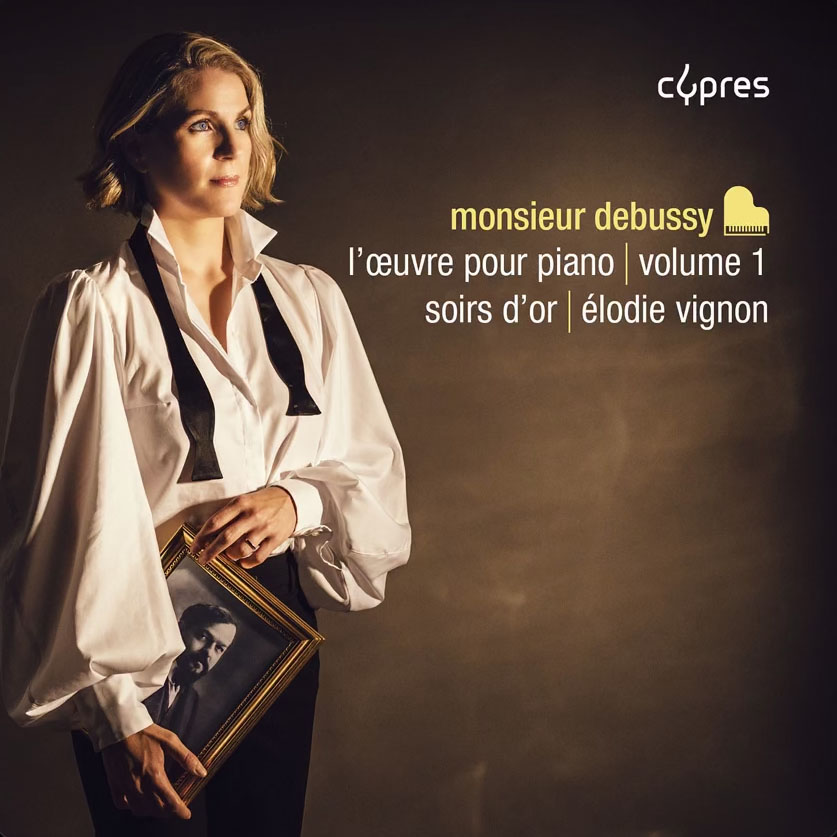
Monsieur Debussy | The Piano Works | Vol. 1: Soirs d’or Élodie Vignon
Why Debussy?
by Élodie Vignon
I wanted music to have a freedom that it would possess perhaps more than any art, not being restricted to a more or less exact representation of nature, but to the mysterious correspondences of nature and the imagination.
— Claude Debussy
Debussy has always held a treasured place in my heart and in my repertory. Playing this music is like going into a cocoon that belongs only to yourself.
As I was concluding the recording of the Douze études — my first disc — during the summer of 2017, there emerged the desire to record the complete set.
Debussy’s writing has always amazed me. It is both carnal and melancholic, through the skilful alliance of tenderness and the greatest generosity, time held in suspension as though by magic, mysterious suggestiveness, and its unprecedented capacity to make us dream.
If these initial pieces are barely disguised acknowledgements to his predecessors (Valse romantique, Nocturne, Mazurka, Ballade), he at once imposes his own style. In the Prélude à l’après-midi d’un faune and the Suite bergamasque, directly inspired by poems of Mallarmé and Verlaine, these pieces first and foremost work on feelings. This is how Debussy’s journey starts, through the mysterious dimension of sensorial imagination.
The Images and the Préludes (which are perhaps his absolute masterpiece), richly dense with superimposed material, rhythmic gyrations and open harmonies, form the quintessence of those:
fragments of eternity with neither beginning nor end
— Harry Halbreich
Without renouncing his idealism at the heart of Children’s Corner or a few miniatures, as with his homages to French composers of the past (Pour le piano, Hommage à Rameau), Debussy reveals a fatalistic perception of existence. His illness was finally to reveal his profound melancholy. It is in his Douze études and En blanc et noir for two pianos that the paroxysm of Debussy’s darkness is reached.
While never breaking with his heritage, Claude Debussy is nonetheless a pioneer of modern art, taking part, with his many friends (Redon, Mallarmé, Viñes, Falla, Diaghilev and Camille Claudel among others), in displacing the epicentre of Germany towards France.
The choice of recording the complete chronological series of Debussy’s piano works was born from what the Prélude à l’après-midi d’un faune was in Debussy’s lifetime: a revelation. Pierre Boulez refers to it as the first modern piece, in 1894. The poet Stéphane Mallarmé was to say of it:
This beautiful music is not discordant with my poem, and it goes even further, truly in nostalgia and in light, with refinement, with unease, with richness.
— Stéphane Mallarmé
The composer’s transcription for two pianos opens Soirs d’or.
Music of sky and water, music of perfumes and colours, the music of Debussy is strangely void of any human presence.
— Harry Halbreich
A skilful conjunction of rhythm and harmony, Debussy’s alchemy unfolds in three dimensions: vertical chords or garlands of notes and horizontal melodic lines (Et la lune descend sur le temple qui fut, La Soirée dans Grenade, Reflets dans l’eau…) or distant bells and sorrowful singing that escapes the grasp of time.
Releasing music from the polarisation exercised by the note of tonality, which enables him to retain an open sound space, Debussy inaugurates spectral music.
Andrea Malvano, an eminent Italian musicologist, in his work L’Ascolto di Debussy (2009, French translation Debussy, un nouvel art de l’écoute, Van Dieren 2020), invites us to discover how Debussy manages to recondition the process of listening to his music. The imagination brought to bear is not a representation of images, but addresses our deep psyche in order to reveal its most unfathomable movements. Debussy the composer liked to be inspired by memory, so as to keep a certain distance between his own emotion and that with which he wishes to imbue the listener. This drawing back gives the impression that what is to be discovered is always in the background, hidden at times by a transparent veil, at times by a mist, at times by an iridescent breeze. In this way the emotion reveals itself gradually. It is perhaps this suggestive sensuality that gives him the title of master of dreams, as Jean-Efflam Bavouzet liked to call him.
His music tells us nothing of the world yet makes us feel its presence. (…) This silence of Debussy is neither emptiness nor nothing. It encloses the enigma of the world.
— Philippe Charru
An organist by training and a Jesuit, Philippe Charru attempts in his work Quand le lointain se fait proche (Le Seuil 2011) to understand how Debussy’s music, by bringing us closer to the mysterious essence of the world, becomes a kind of spiritual quest. When the composer claims to want “something inorganic in appearance and yet essentially ordered”, he uses movement as the starting point for his music. It is later that the figure arises that gives the impression his music is invented at the very moment it is being played. However, we always pursue our emotional path in the direction of the essential question, that is to say, how we travel through this world on our own. The music of Debussy invites us to dream, the better to understand the complexity of the world. It is this spiritual elevation that in my opinion renders it eternal.
Logbook
Monsieur Debussy — Watch the videos on YouTube
Dédicace
Episode 1
Soirs d'or
Episode 2
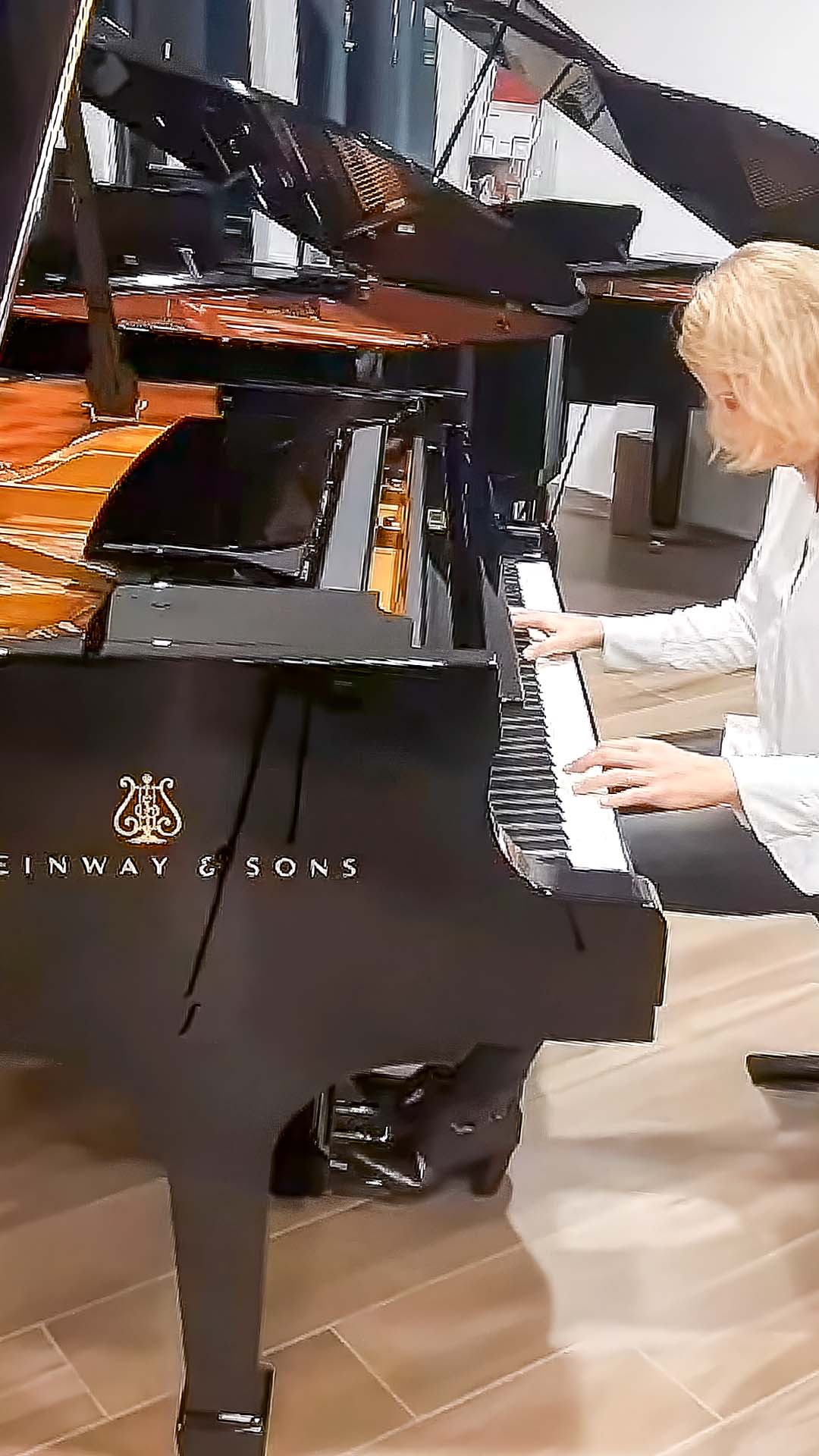
Adoption
Episode 3
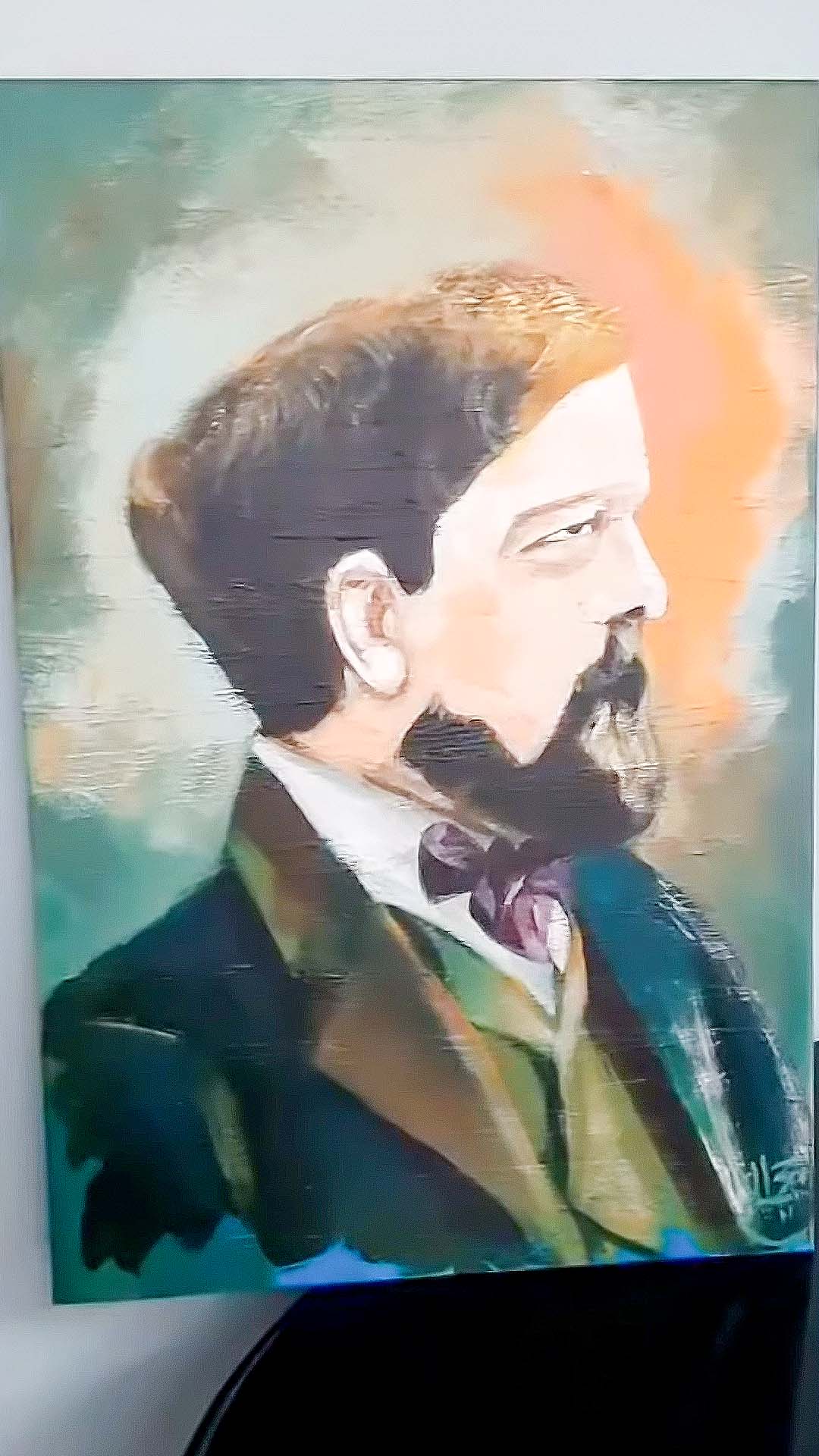
Description
Episode 4
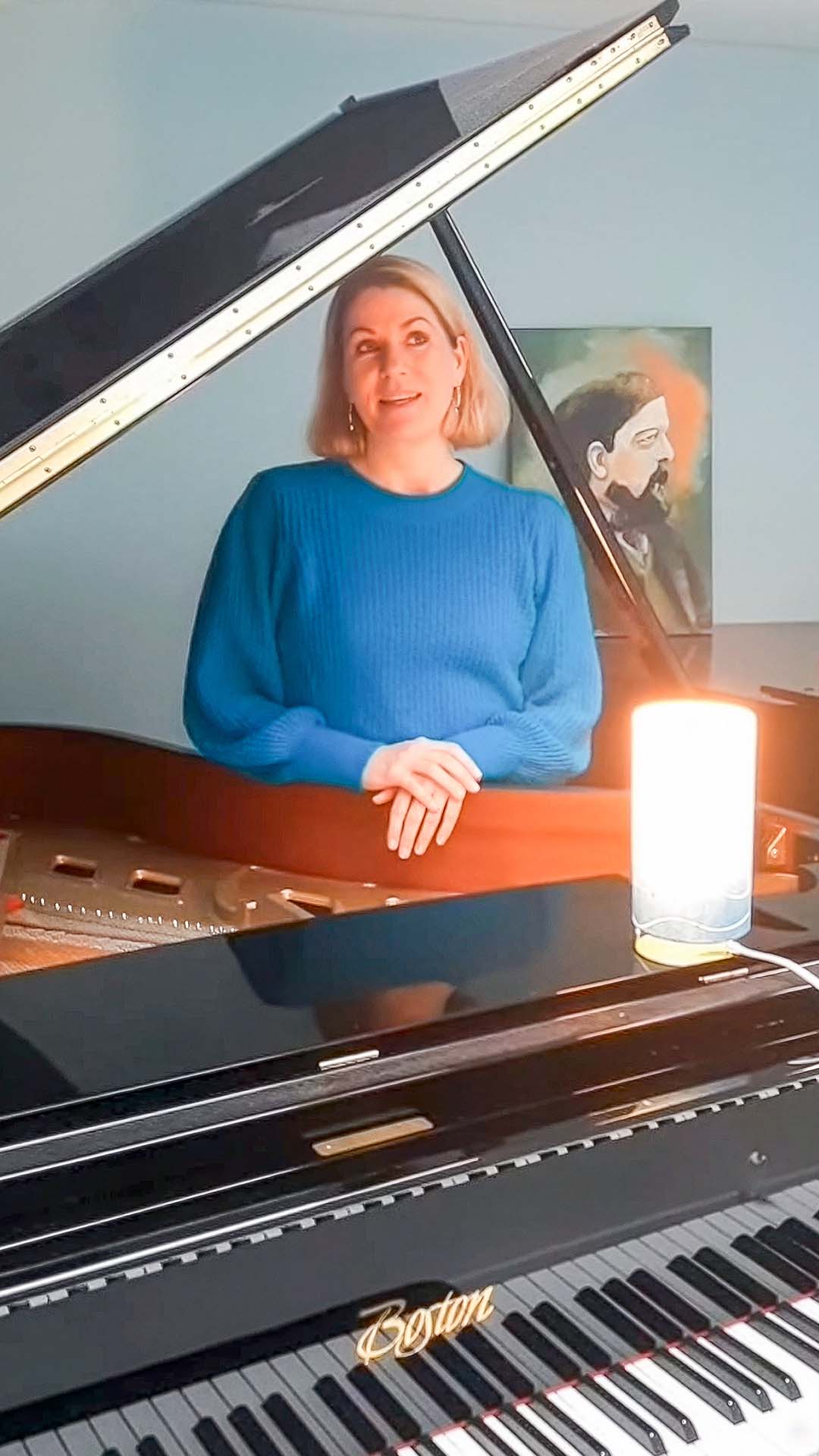
Recording
Episode 5
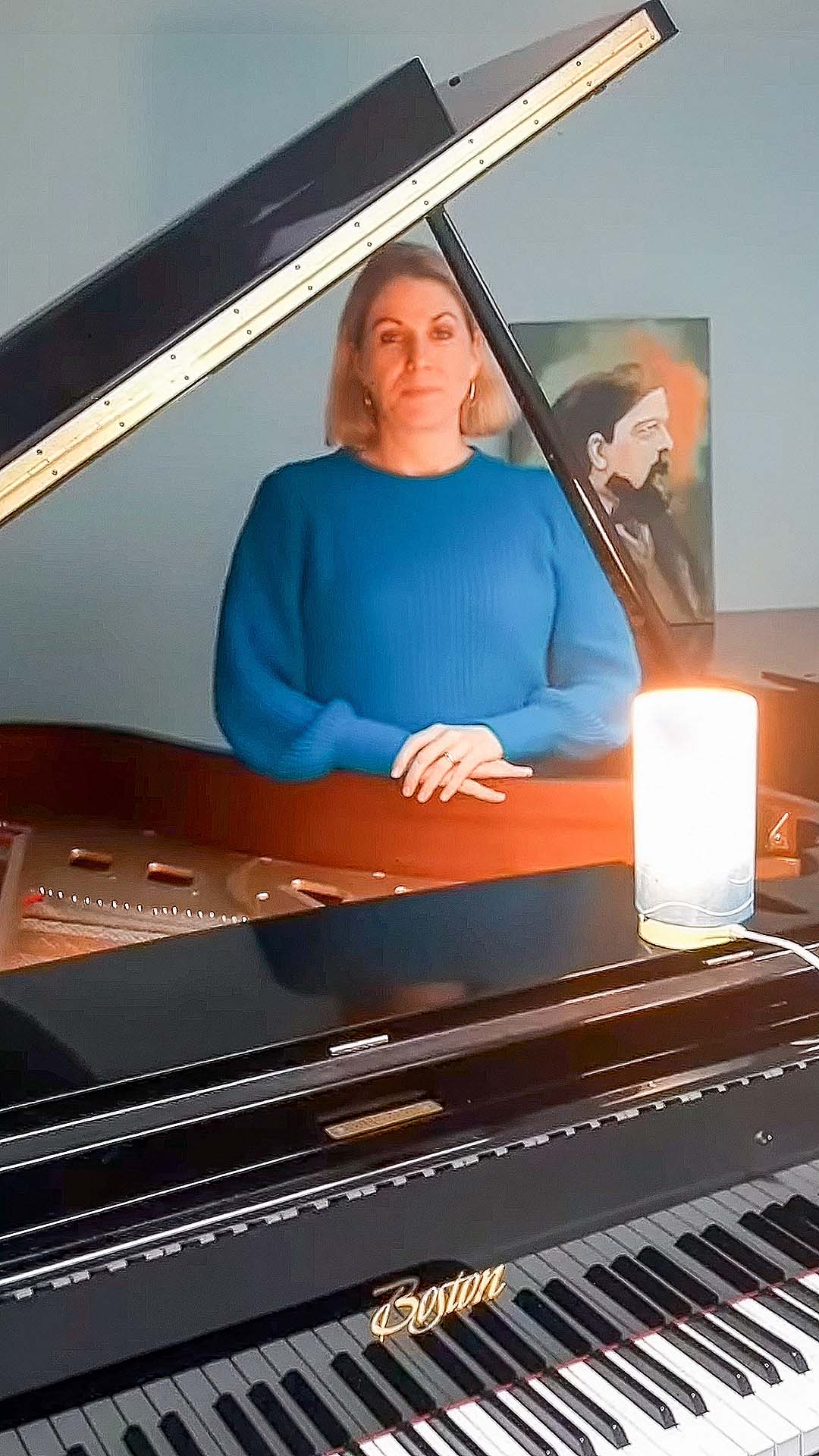
Le Faune
Episode 6
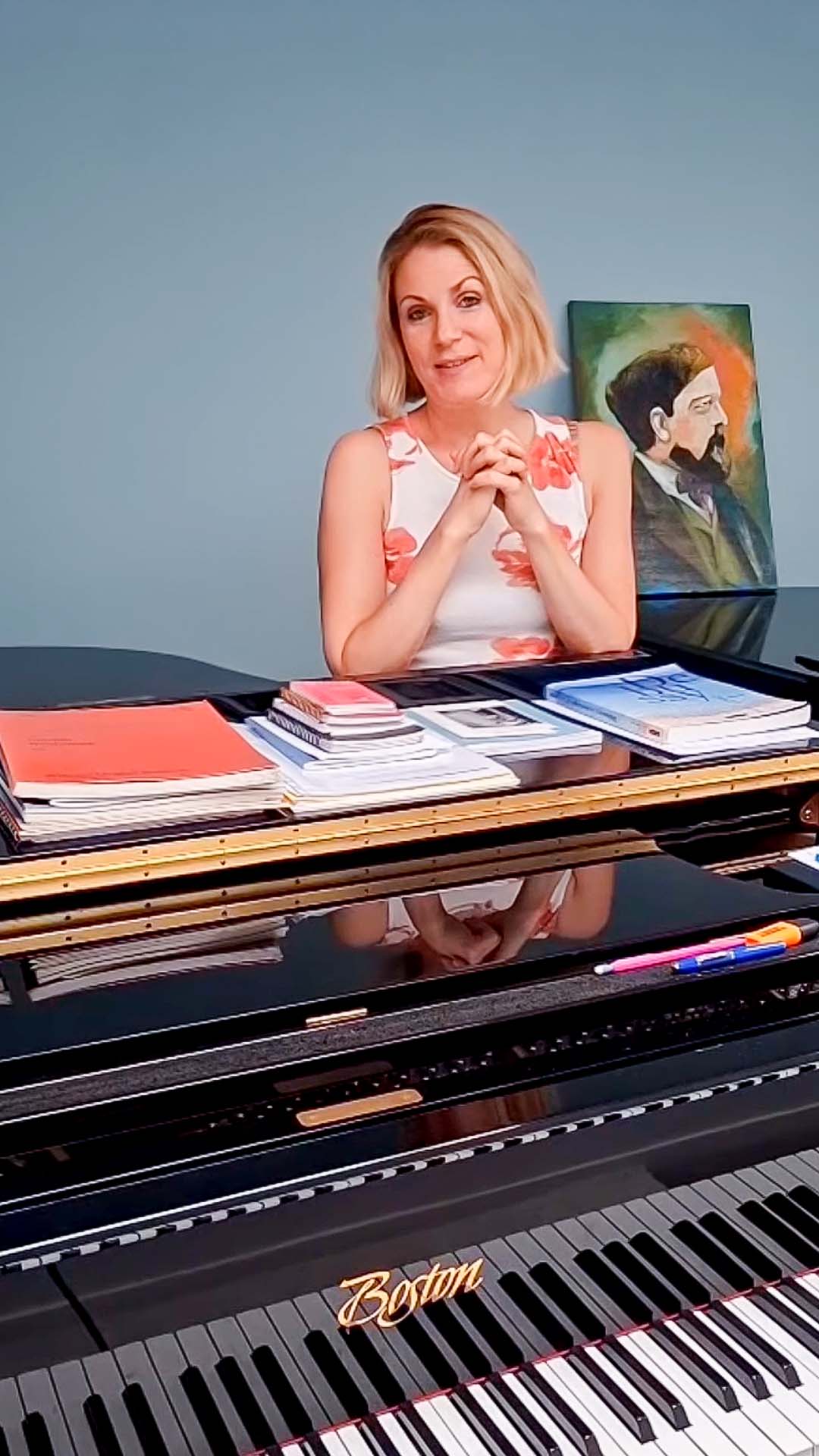
Poissons d'or
Episode 7
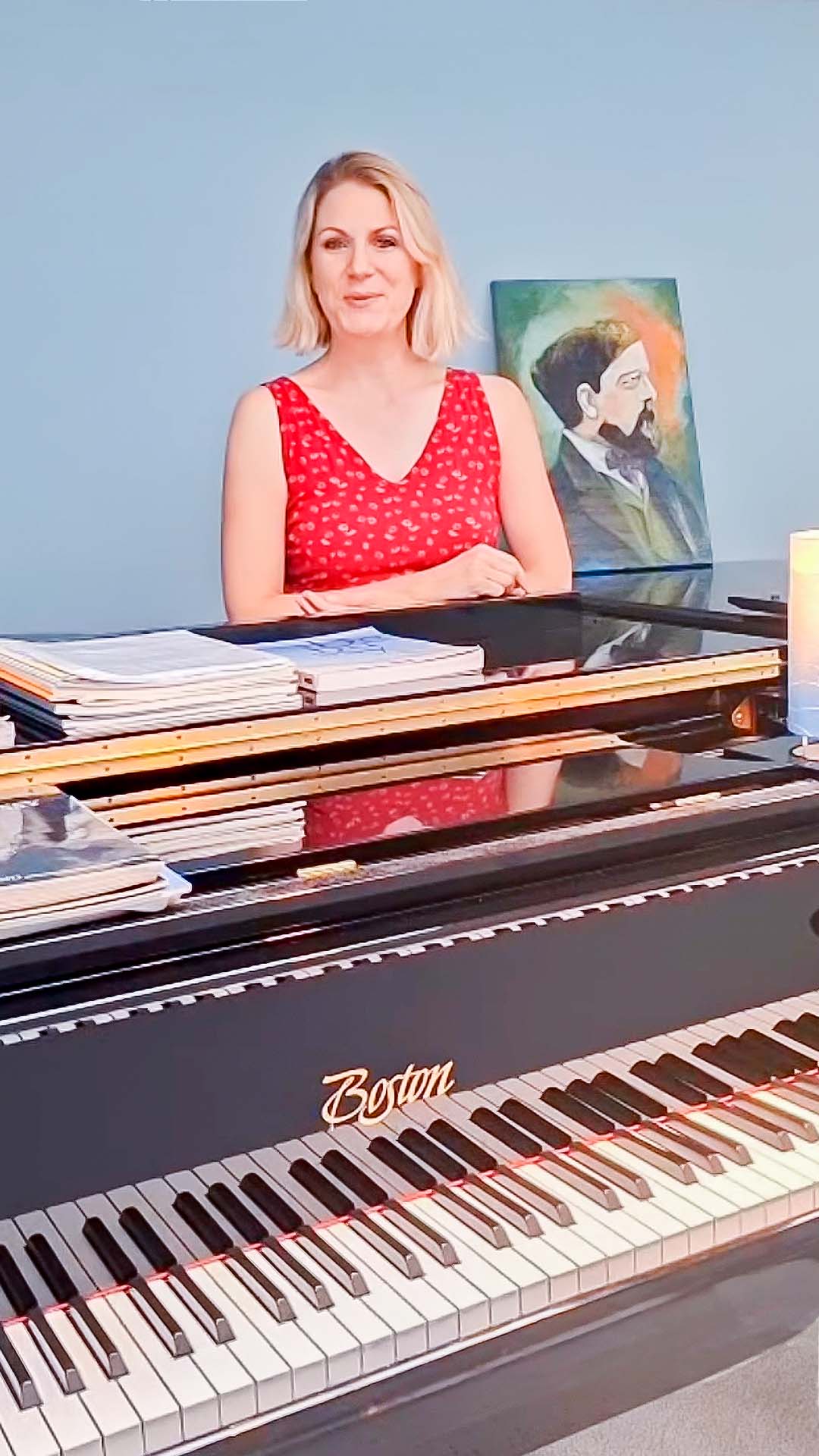
La Suite
Episode 8
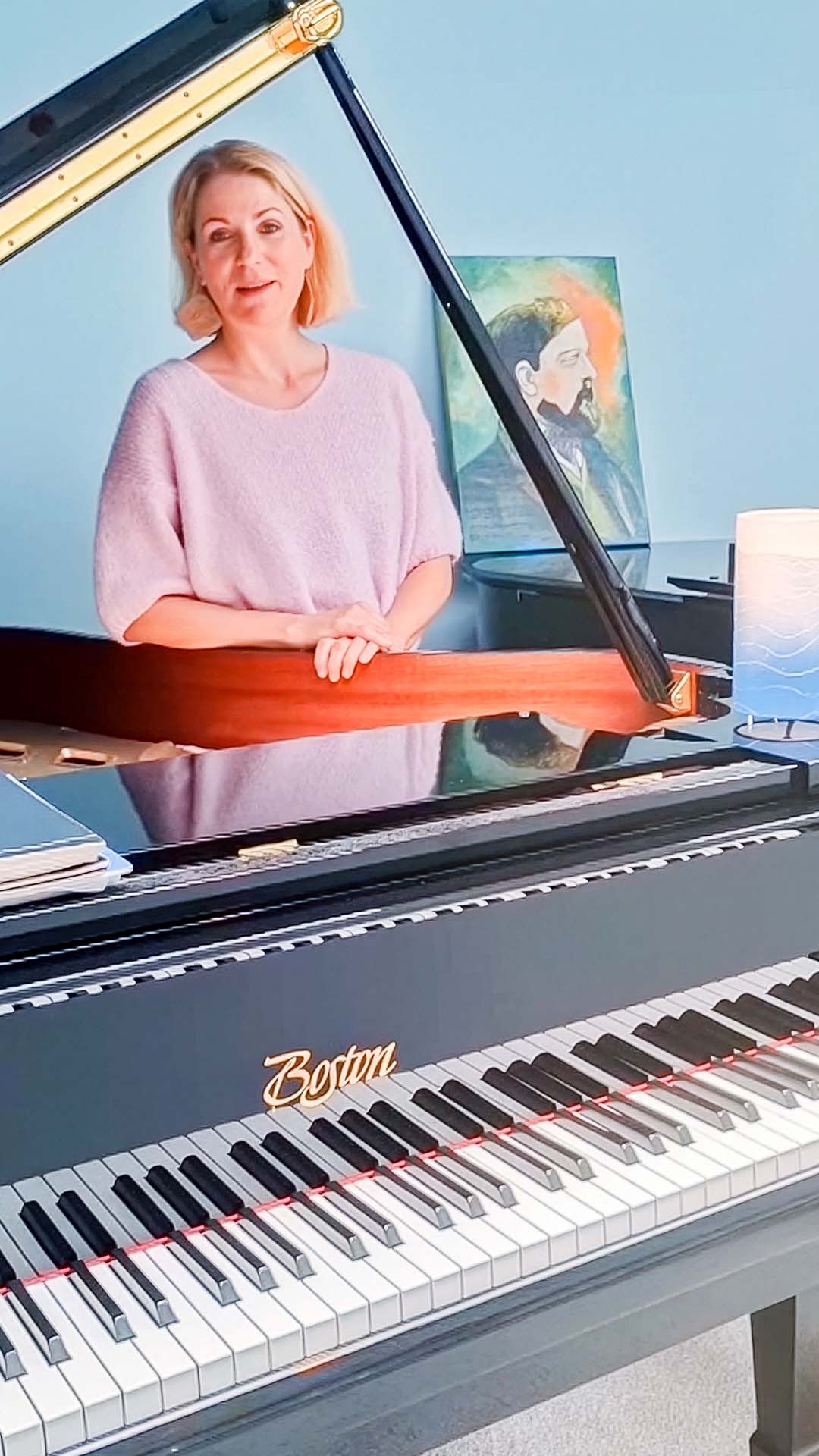
Rosalie et Emma
Episode 9
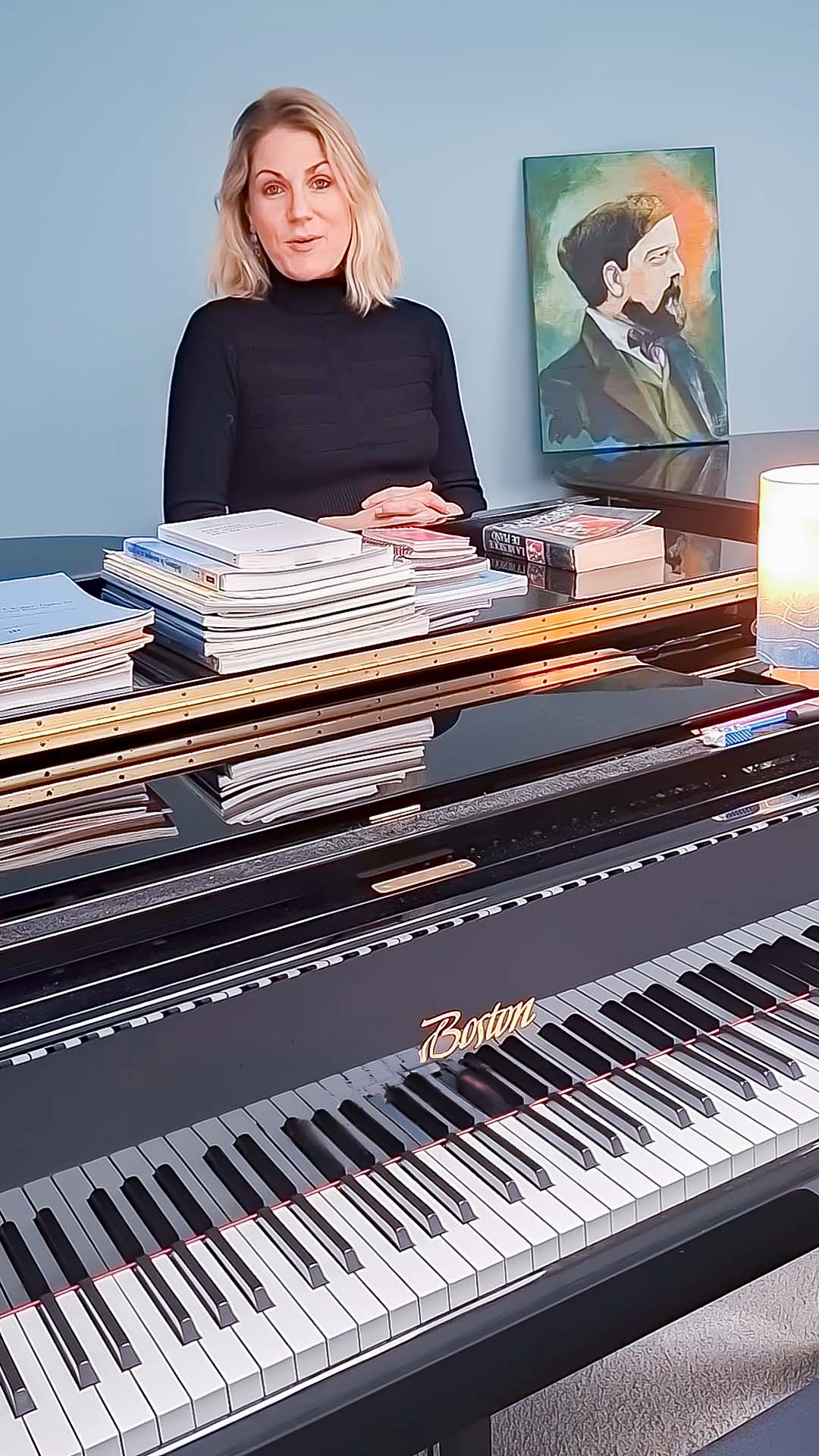
Franz Liszt
Episode 10
La Habanera
Episode 11
Des pas sur la neige
Episode 12